


A crypto KOL due diligence checklist is a pre-contract review of a creator's identity, audience, content, financial incentives, disclosure practices and ability to produce measurable outcomes. Ask for platform-native evidence, inspect recent posts manually, review token and sponsor conflicts, and agree on tracking and approval terms before sending payment. Follower count alone is not proof of trust, fit or conversion potential.
Crypto promotions deserve particular care because a creator may be paid in cash, tokens, allocations or referral commissions; may already hold the promoted asset; and may speak to audiences in different jurisdictions. The checklist below gives a founder, exchange growth team or agency buyer a repeatable process. It is a procurement workflow, not a substitute for legal advice or platform policy review.
Key Takeaways
- Verify the creator's identity and control of each account before reviewing commercial terms.
- Ask for native audience and post analytics, then inspect real comments and audience fit.
- Document cash, token, affiliate and holding conflicts; require visible sponsorship disclosures.
- Contract for deliverables, claim approval, usage rights, tracking and a cancellation path.
- Run a small measured pilot before increasing spend, and score qualified outcomes over impressions.
Table of Contents
- Evidence to collect
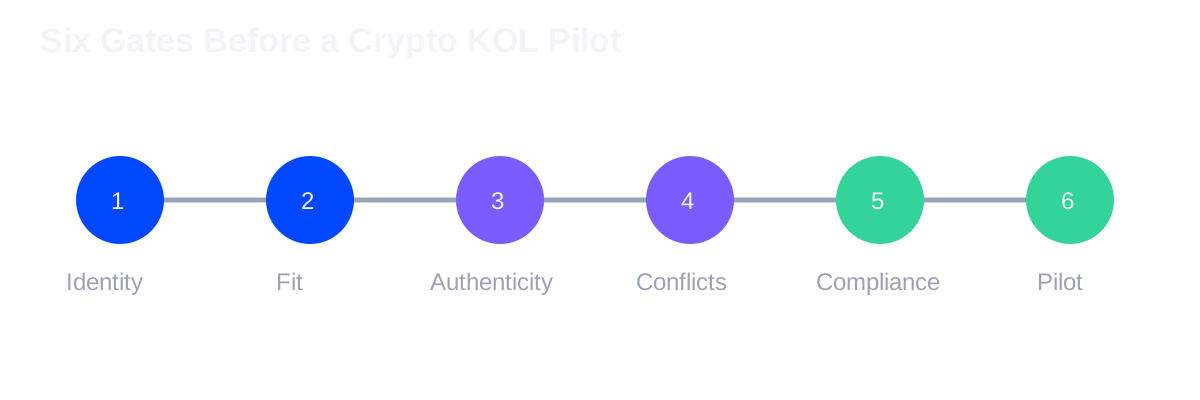
- Six due-diligence gates
- Scorecard and hard stops
- Copyable checklist
- Pilot measurement and final decision
What Evidence Should You Request from a Crypto KOL?
Start with a creator dossier, not a rate card. Ask for the public handles and an account-control confirmation, audience location and language from native analytics, recent post-level performance, previous sponsored posts, current sponsor and token interests, pricing by deliverable, and a sample content approval process. Limit data requests to what is necessary and handle personal information according to applicable privacy rules.
For an X account, screen-shared analytics or dated exports can support a review, but screenshots can be altered and platform metrics may have definitions that change. Validate with public posts and, when useful, a short live screen share. X's audience-insights documentation describes location, language, interests and related audience dimensions; ask the creator to show the relevant native view rather than sending an unverifiable one-line claim.
For video or Telegram creators, request platform-specific evidence appropriate to the channel: retention and traffic-source analytics for video; active member and moderation information for a community; referral or sign-up events for performance. Do not assume an X impression, a video view and a Telegram member are equivalent units.
Step 1 — Verify Identity and Account Control
Confirm that the person signing the agreement controls the published channel. Check the handle across the pitch, invoice, contract and payment details. Ask for a live account action or platform message if impersonation is plausible. Search for lookalike handles and prior account-name changes where records are available.
An agency representative may negotiate on the creator's behalf. In that case, document the representative's authority and the exact accounts covered by the agreement. Never send funds or token allocations solely because a messaging account claims to represent a known creator. Use a controlled payment approval path.
Hard stop: unresolved account ownership or a request to pay an unrelated wallet or entity without a verified explanation.
Step 2 — Test Audience Fit Before Audience Size
Define the audience your product can actually serve. A derivatives exchange needs eligible traders in permitted markets; a developer platform needs builders; a wallet may need users who can reach a funded-use event. Specify target region, language, product category, risk appetite and the desired next action before viewing a creator shortlist.
Compare the creator's native geography and language data with those requirements. Inspect at least 10 recent unsponsored posts and 3 prior sponsored posts as an internal review sample. Those counts are a practical sampling rule, not an industry standard. Read comments for specific discussion of product mechanics, not just emoji or repetitive praise. Consider how many posts were amplified by giveaways or paid campaigns.
A smaller creator with relevant users may be more useful than a large account whose audience is in excluded jurisdictions. ChainPeak's Crypto KOL Asia rates guide provides regional cost context, but a rate should be judged only after audience fit and outcome definitions are clear.
Step 3 — Check Authenticity and Content Quality
Look for sudden follower jumps, repeated comments, identical reply timing, high impression counts with little substantive conversation, or engagement concentrated around prize offers. None of these signals alone proves fraud; they justify more evidence. Ask the creator to explain outlier posts and show a dated series, not only their best-performing example.
Review accuracy, tone and corrections. Has the creator explained both a project's benefits and risks? Do they distinguish personal opinion from paid claims? Do they correct mistakes visibly? For a technical protocol, have a product expert review at least one sample post for factual competence. A polished audience chart cannot compensate for a creator who misstates the token, product or eligibility rules.
Use a consistent worksheet: record the post URL, date, format, impressions or views when verified, substantive comments, sponsorship status, call to action and any concerning claim. A transparent review is more defensible than a single opaque “bot score.”
Step 4 — Identify Token, Sponsor and Affiliate Conflicts
Ask the creator to disclose current paid relationships, token grants, allocations, referral commissions and material holdings relevant to the proposed message. Record whether compensation is cash, tokens, vesting allocations, affiliate fees or a combination. Contract terms should prohibit undisclosed additional promotion of a directly conflicting offer during any agreed exclusivity period.
Historical promotion matters. Review past token calls, deleted posts where reasonably discoverable, and how prior sponsorships were labeled. This is a risk screen, not a claim that a past price decline proves misconduct. Ask for conflicts in writing and give the creator a defined process to update them if circumstances change before publication.
The U.S. Federal Trade Commission's influencer guide explains that a material connection can include money, free products or other benefits and should be made obvious to the audience. In crypto, token allocations and affiliate incentives should therefore be reviewed as potential material connections where U.S. rules apply. Have counsel assess the actual jurisdictions and content.
Step 5 — Review Promotion Rules and Approval Rights
Give the creator an approved fact sheet: what the product does, eligibility, risk language, unsupported claims, prohibited promises and links to source documents. Require a pre-publication review path for factual and compliance-sensitive statements while preserving a clear record of who approved the final post. Do not ask a creator to promise price appreciation, guaranteed yield or listings the project cannot substantiate.
Regulatory rules are jurisdiction-specific. ESMA's MiCA Article 7 text says covered EU crypto-asset marketing communications must be identifiable as marketing and fair, clear and not misleading, with additional requirements in the article. The UK Financial Conduct Authority's cryptoasset resources set out the UK regime and related obligations. Do not copy one jurisdiction's disclosure template into every market. Obtain qualified review before launch.
Hard stop: the creator refuses required sponsorship disclosure or insists on an unapproved financial claim.
Step 6 — Contract, Track and Run a Small Pilot
Write deliverables precisely: channel, format, dates, language, link, live duration, revision count, disclosure, reporting and replacement conditions. State who owns the finished creative, whether the brand may reuse it, how long usage rights last, and whether paid amplification or category exclusivity is included. Tie any token payment to written wallet, vesting and tax-handling terms reviewed by advisers.
Use a unique UTM, referral code or landing page for each creator where permitted. Define the qualified outcome before the post: for an exchange, perhaps a verified first trade; for a wallet, a funded active user; for DeFi, a valid fee-generating action. Track the funnel from click or code use to that outcome, with privacy and fraud controls. ChainPeak's Web3 marketing ROI guide explains why wallet connections and trading volume should not be equated with realized revenue.
Start with a limited placement or short test period. Compare qualified outcomes, cost and content quality—not only reach. A creator who drives large numbers of low-quality or ineligible signups should not automatically receive more budget. ChainPeak's crypto influencer agency comparison addresses vendor selection; individual creator screening remains necessary even when an agency sources the talent.
A Practical Crypto KOL Vetting Scorecard
Use a 100-point internal scorecard as a decision aid, not an objective industry rating. Assign 20 points each to audience fit, authenticity, content credibility, conflict/disclosure quality and operational reliability. Set your own minimum threshold before seeing names; for example, a team might require 75/100 for a pilot. That threshold is a sample policy, not a validated performance predictor.
| Dimension | Evidence to record | Score |
|---|---|---|
| Audience fit | Native geography/language, relevant discussion, eligible users | 0–20 |
| Authenticity | Post series, comment quality, outlier explanations | 0–20 |
| Content credibility | Product accuracy, balanced history, corrections | 0–20 |
| Conflicts and disclosure | Written interests, visible prior disclosures, agreed rules | 0–20 |
| Reliability | Identity, contract, approvals, reporting and references | 0–20 |
Apply hard stops regardless of score: unresolved identity, refusal to disclose a material incentive, false claims, prohibited jurisdictions, or unwillingness to provide minimum campaign reporting. A numerical score should organize judgment, never override a material risk.
Copyable Crypto KOL Due Diligence Checklist
- [ ] Confirm target market, target user and qualified conversion event.
- [ ] Verify all public handles, account control, contracting party and payment route.
- [ ] Obtain native audience location/language evidence with a date and channel label.
- [ ] Review at least 10 recent organic and 3 sponsored posts as an internal sample.
- [ ] Inspect substantive comments, engagement outliers and giveaway dependence.
- [ ] Check technical accuracy, past corrections and high-risk financial claims.
- [ ] Obtain written cash, token, affiliate, sponsor and relevant holding disclosures.
- [ ] Send risk language and route the proposed creative for jurisdictional review.
- [ ] Agree on disclosure text, placement, final approval and archive of the live post.
- [ ] Itemize fee, token value method, usage rights, exclusivity and cancellation terms.
- [ ] Set creator-specific tracking, reporting fields, fraud rules and pilot decision date.
- [ ] Record score, hard-stop decision, approver and supporting evidence links.
Final Answer
Use the crypto KOL due diligence checklist before discussing reach-based pricing or paying a deposit. Verify the person, the audience and the content; document every material incentive; obtain market-specific approval; and contract for traceable deliverables. Then run a limited pilot against a qualified user action. The point is not to create a perfect “trust score,” but to make the reason for hiring—or rejecting—a creator inspectable by the project team.
